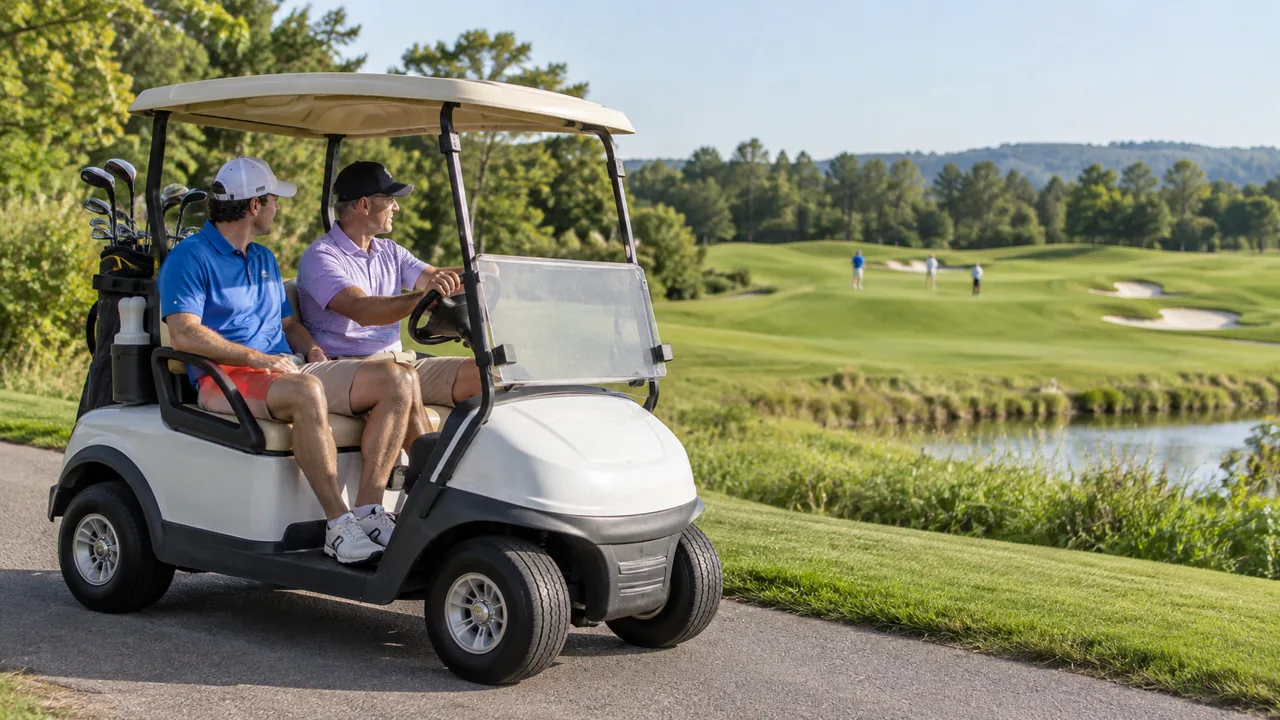
A golf cart can help a group move comfortably around a course, but it also changes how players share paths, protect turf, and approach other golfers. Good cart use is part of the round rather than a separate driving exercise between shots. The most useful habits are simple: understand the day's restrictions, move predictably, give people space, and park where the next part of play can continue smoothly. A few deliberate choices can make the course easier to enjoy without leaving unnecessary wear or creating avoidable distractions.
Ask about the day's cart policy before leaving
Course conditions change, so yesterday's permission to drive on the fairway does not establish today's policy. Check with the golf shop or starter about cart-path-only holes, restricted areas, and any special instructions. Pay attention to signs, ropes, and stakes once on the course. These may protect wet ground, concentrated wear, or a location that presents a safety concern. Do not treat a barrier as a suggestion simply because a convenient route appears to continue beyond it.
The USGA's Cart Etiquette 101 explains why course cart policies and traffic-control measures deserve attention. Those policies support both playing conditions and safe movement. If the instruction is unclear, ask before driving across an area you may not be allowed to use. A short question at the start is easier than reversing a poor decision on a narrow path or leaving tire marks across a part of the course staff were trying to protect.
Get familiar with the cart itself
Before moving, learn the controls and any instructions supplied by the operator. Check that the cart appears ready for use and report a damaged tire, unusual control response, loose equipment, or another concern. Do not assume every rental cart behaves exactly like the one used on a previous course. If something feels wrong, stop in a suitable place and contact staff. A golf cart is a vehicle, and an unfamiliar or defective control is not something to work around casually during the round.
Keep the number of occupants within the cart's designated seating arrangement and follow the operator's rules for drivers and passengers. Sit properly and keep belongings secured so they cannot fall into the controls or onto a path. Do not allow a passenger to stand on the rear or ride on equipment intended for bags. A quick trip between holes is still a moving vehicle trip. The fact that the setting feels relaxed does not remove the need for predictable, controlled use.
Understand a ninety-degree instruction correctly
When a course allows fairway access under a ninety-degree rule, learn how that instruction is being applied locally. The basic idea is to use the path until level with the ball, take a short perpendicular route to it, and return appropriately rather than driving along the fairway for the rest of the hole. The USGA explanation of the ninety-degree rule describes how that arrangement can reduce unnecessary traffic across turf. Course-specific restrictions still govern where access is permitted.
Do not use the rule as permission to drive through a wet patch, around a rope, or close to a green. Look at the actual surface and follow staff instructions. If a partner's ball is farther ahead, it may be more considerate to plan where each player walks rather than repeatedly driving across the same area. Keep the movement simple and avoid turning the fairway into a series of short vehicle repositioning tasks. The cart should support play without becoming the center of it.
Give pedestrians and other players room
Slow and plan ahead when approaching people on a path or near a tee. Do not expect someone carrying clubs to step aside instantly or assume that a person has heard the cart approach. Stop when needed and allow a clear passing arrangement. Keep extra care around practice areas, clubhouse approaches, and crossings where people may be looking toward play rather than traffic. A predictable pause is more useful than a hurried attempt to squeeze between bags, players, and another cart.
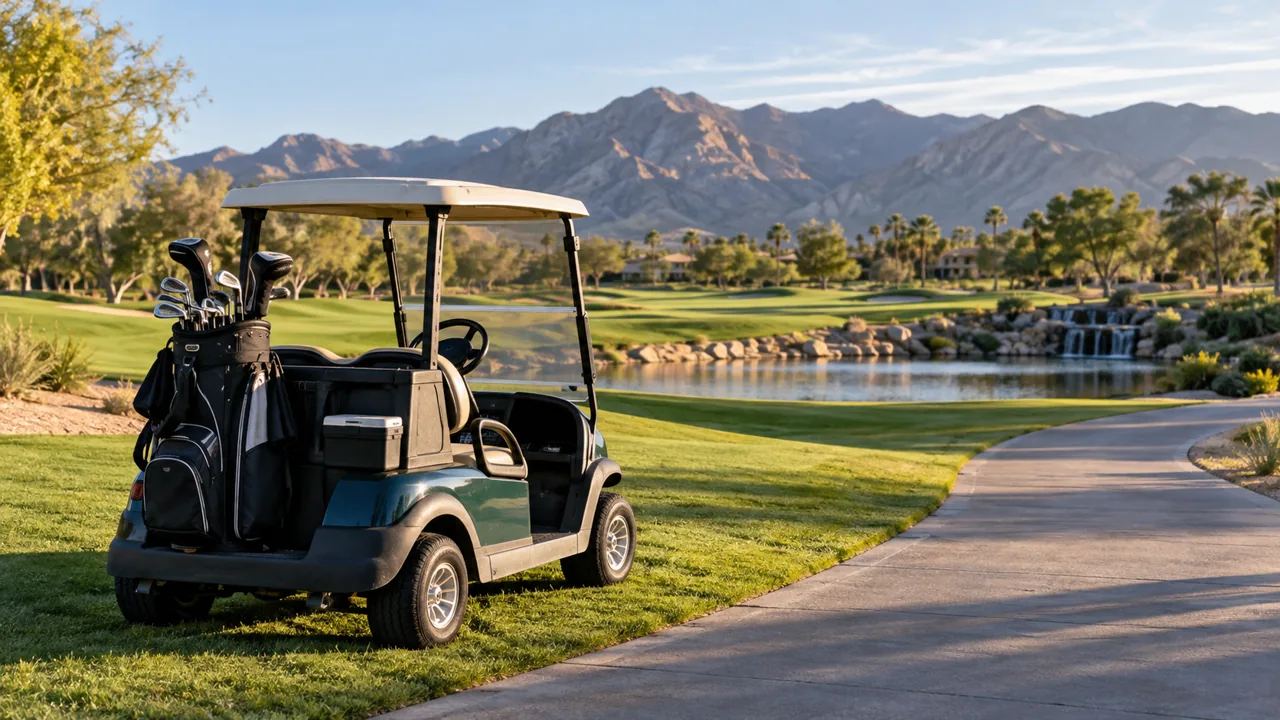
Avoid moving or stopping in a way that interrupts someone preparing to play a shot. Consider noise, position, and movement in their field of view. A cart can be distracting even when it is not physically close to the golfer. Wait in an appropriate place and keep conversation considerate. If you need to pass another group, coordinate with them rather than driving past while a player is addressing the ball. Course courtesy works best when the cart's movement is easy for everyone nearby to anticipate.
Park with the next movement in mind
Choose a permitted stopping position that keeps the path usable and leaves a straightforward departure. Keep the cart away from greens, tees, bunkers, and other restricted areas, following the course's signs and instructions. Where appropriate, position it toward the next stage of the hole so the group does not need to retrace a long route after finishing. Do not sacrifice a legal, safe parking place merely to save a few steps. A short walk is usually less disruptive than blocking a narrow section of path.
Check the ground and slope before stopping. Follow the cart's parking instructions and make sure it is secure before anyone steps out. Avoid leaving it where it can roll, obstruct another vehicle, or force pedestrians onto unsuitable ground. Keep all wheels on the path where the course directs and space permits. Parking partly on a worn edge can add damage to precisely the area that receives concentrated traffic. Small choices repeated by many groups have a visible effect on the course.
Adapt to weather without improvising shortcuts
Wet surfaces, poor visibility, and changing weather can make familiar cart routes less forgiving. Follow the course's current instructions and do not use a golf cart as shelter from hazardous weather. Know the venue's suspension-of-play and shelter procedures before the round. If staff direct players off the course, respond promptly and use the designated route. Avoid attempting to cross a flooded or obviously unsuitable area simply because the clubhouse appears closer on the other side.
Drive conservatively around bends and slopes, and avoid sudden changes in speed or direction. Keep attention on the route rather than checking scores or messages while the cart moves. If a navigation or scoring screen is available, interact with it when stopped appropriately. A phone call can wait until a safe, considerate break in play. The same calm pace that protects passengers also makes movement around other golfers easier to understand.
Finish by returning the cart properly
At the end of the round, follow the return instructions, remove personal items and rubbish, and tell staff about any problem noticed during use. Do not leave a developing fault for the next group to discover. Secure clubs and belongings before unloading, and keep the return area clear for other carts and staff. If charging or refuelling is part of the operator's process, leave it to the designated staff or follow explicit instructions rather than experimenting with unfamiliar equipment.
Good cart etiquette is a practical form of respect for the course and the people sharing it. Check the policy, understand the controls, protect sensitive ground, and move with patience around players and pedestrians. Those habits do not slow the round unnecessarily. They remove the awkward interruptions caused by poor parking, confusing movement, and avoidable damage. The result is a cart that helps the group enjoy the course while leaving the next group a better place to play.